
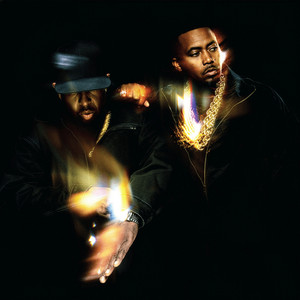
“Already classic before you heard it” isn’t just braggadocio. It’s an acknowledgement of impossible expectations. The first beat you hear on Illmatic is DJ Premier’s, that sound so synonymous with Nas in his purest and greatest form. Not that Nas is beholden to an album he made when he was nineteen – he’s crawled up out of that grave, many times, in a career that seemed mostly abandoned until a six-album run with producer Hit-Boy reignited it.
So why not this long awaited album collaboration with DJ Premier? Light-Years can be seen as a lesson, in nostalgia colliding with this instant judgment era. One cannot listen without formulating opinions, almost like getting a Christmas present and instantly worrying about how to get it back into a box. Opinion makers are circling this album, warily, eyes out at one another while the music becomes secondary to whose take is best. Though that’s true about everything these days isn’t it?
Light-Years doesn’t make it easy. To me it’s easy listening – both fifty-plus Nas and Premier have made a ’90s cassette banger album. Which opens up some difficulties in trying to critically deal with it. One thing I’ve noticed about that classic era rap – it probably sounds regressive and samey to those not lately immersed in it. Like jam band music, outsiders wonder what the fuss is about. Nas is not a super dynamic flow guy, while DJ Premier hasn’t really acclimated himself to changing trends in underground boom bap. Light-Years is an old headed, hard headed album for the true faithful.
We’ve had a flood of new Nas material in the past five years. The first Magic album from 2021 ranks for me as one of his best albums, ever. Though his discography in hindsight is actually pretty consistent. The best I can say about 2004’s double album Streets Disciple is that it doesn’t feel vital, aside from the tacked on single “Thief’s Theme.” 2008’s untitled suffers a bit from the glitzy overproduction of 1999’s I Am… and 2018’s Nasir is basically Kanye featuring Nas. Those titles constitute the generally regarded lower ranks, none of them bad and all yielding gems and moods to remind you of his artistry and moral integrity. Still what the Hit-Boy albums proved is that Nasty Nas is best in the booth with his type of beats. I suspect they proved something to Nas too. Don’t be intimidated by your own legacy – life is short, drop music, keep moving.
So the real pressure here was on DJ Premier. We should acknowledge this man’s contribution, not just to Nas’s music. He didn’t invent the sample chop but he sure perfected it, with his distinctive style of interspersing bassline hits or single piano notes with aberrant sound effects. Think about how that opens up true sampling, compared to say – dare we mention his name? – the late ’90s Diddy style of looping up a familiar riff and calling it a song. Sampling is a beleaguered art form. Just last month we saw that Spotify bought the WhoSampled website. So crate digging is under more corporate control than ever. And perhaps, some might say, why not? If you loop up someone’s work and make a banger beat out of it, shouldn’t royalties be shared? In the mid-2010s producers were employing in house bands to cull samples from. Pete Rock did this, so did DJ Premier, to middling results. All of this to say that Premier already had a solution for producers, thirty plus years ago – chop it until it’s unrecognizable. Be creative, be weird, be dope.
Light-Years doesn’t feel like an album produced for Nas the superstar in 2025, more like Afu-Ra in 1996. Which is surely the point. I’ll admit that it got a little tedious on the first listen. Again Nas is not a punchline guy, nor does he vary his flow, nor do the beats allow for that. He’ll often circle around familiar themes, of classic nostalgia and his ascension as an investment baron. “Thirty-five thousand feet is where I write my rhymes at” – that line stuck out, at first, as emblematic. But then I kept listening. It gets better with every spin, great lines materializing, bass chops settling into perfect pockets.
Not that it doesn’t have its flaws. “Nas Esco Nasir” is a miss, with Nas doing the Eminem thing of arguing personas, which never works. Nas is saner than Eminem, and so doesn’t have the same schizophrenic depths to draw from. And I don’t buy Escobar as a separate persona. He’s referring to the mid-to-late ’90s era of kingpin drug stories, exemplified by Foxy Brown’s economics lesson on “Affirmative Action,” influenced by Raekwon and Jay-Z. I’d argue that it’s only in hindsight, after critical perception and some scars landed by Jay-Z in their battle that Nas retroactively embraced Escobar as a character. So then where’s Nastradamus? He doesn’t want us to remember that character, though I like that much maligned album more than most.
“NY State Of Mind, Part 3” is also a miss, unfortunately, a bigger one. The Billy Joel sample is chopped against a vintage Jeru the Damaja strings beat and it just doesn’t work. Though I will credit them for what seems like a conscious decision, to not take the easy route of looping the Billy Joel song for the whole beat, for leaning instead into the grimy aesthetics of the whole project. “3rd Childhood” is also a surprise, a sequel “2nd Childhood”‘s castigation of immature men that embraces quirks and memories as part of the smaller joys of getting old.
Elsewhere there are celebrations of graffiti writers, and female rappers, and a smooth reunion with AZ. The oddest thing about Light-Years is that its strength isn’t really its bars or themes, or anything one can theorize or extrapolate. It’s also not made for earbuds – this is an album to play out loud, to live and marinate with. I’m inclined to buy a boombox and cassette version just to really appreciate it. Why not? It’s like movie buffs who decry streaming services, or Tarantino insisting on analog technology. That’s a fight that feels futile of late, against totalitarian sweeps of technology and convenience.
Light-Years preserves that spirit, like it or not. I can only say that I’ve learned from it – to listen again without instant judgment. Toddlers get toys, to keep their attention engaged. Grown ups work, work out, read books, keep up their responsibilities. Light-Years fits that mindstate. Even on autopilot, it’s a good direction.
 Shakedown Sheet